

10 Black Tech Leaders Changing the Future of Artificial Intelligence in 2026

Share
Artificial intelligence is transforming how people work, communicate, create, and solve problems. But the future of AI is not being shaped by technology companies alone.
Researchers, entrepreneurs, policymakers, educators, and advocates are also influencing how AI is developed and how it affects society.
Across Africa, the United States, Europe, and the wider global technology community, Black innovators are contributing important ideas to the AI conversation.
Here are 10 Black tech leaders to know in 2026.
1. Timnit Gebru

Dr. Timnit Gebru is one of the most recognized voices in AI ethics and responsible technology.
Through her research and advocacy, she has challenged the technology industry to think more seriously about algorithmic bias, discrimination, data, and the social consequences of AI.
Her work has helped make fairness and accountability central issues in discussions about artificial intelligence.
2. Joy Buolamwini

Joy Buolamwini is the founder of the Algorithmic Justice League, an organization focused on preventing AI systems from reproducing harmful biases.
Her research and advocacy brought global attention to problems involving facial recognition and racial and gender bias in automated systems.
She continues to advocate for AI that works fairly for everyone.
3. Inioluwa Deborah Raji
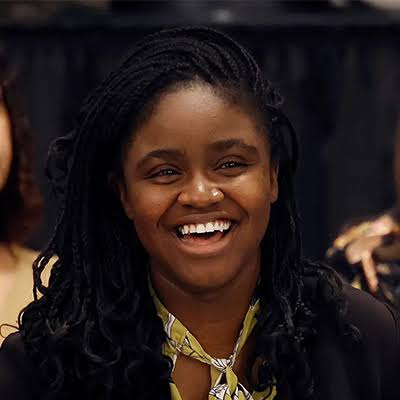
Inioluwa Deborah Raji is a Nigerian-Canadian researcher whose work focuses on auditing AI systems and identifying potential harms.
Her work has contributed to the growing movement for independent evaluation and accountability in artificial intelligence.
She represents a new generation of researchers asking an important question: How do we make sure AI systems actually work for the people they affect?
4. Abeba Birhane
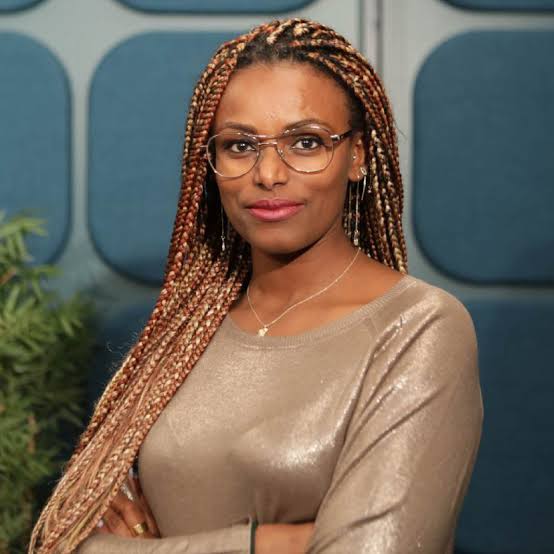
Abeba Birhane is an Ethiopian-born cognitive scientist and AI researcher whose work examines machine learning, datasets, algorithmic systems, and their social consequences.
Her research highlights the importance of understanding the cultural and human contexts behind AI technology.
She has become an influential voice in discussions about responsible and inclusive AI.
5. Rediet Abebe
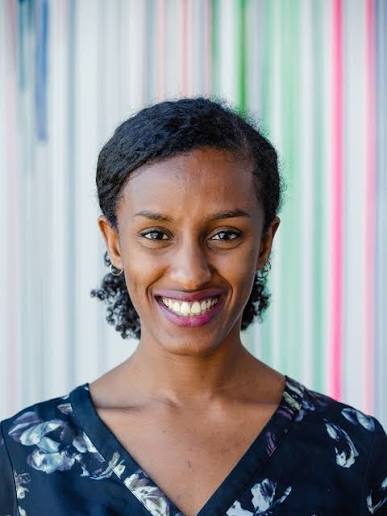
Rediet Abebe is an Ethiopian computer scientist and researcher whose work connects artificial intelligence, algorithms, and social inequality.
Her research examines how technology can affect marginalized communities and how computational systems can be designed to improve people’s lives.
Her work demonstrates that AI is not only a technical issue—it is also a social one.
6. Dr. Latanya Sweeney
Dr. Latanya Sweeney is a computer scientist known for groundbreaking work in privacy, data, algorithms, and discrimination.
Her research has demonstrated how seemingly neutral data systems can produce unequal outcomes.
Her work remains highly relevant as AI systems increasingly depend on enormous amounts of personal and public data.
7. Safiya Umoja Noble

Dr. Safiya Umoja Noble is a scholar whose work explores technology, search engines, algorithms, race, and gender.
Her influential research has helped expose how digital systems can reproduce social inequalities.
As AI becomes increasingly integrated into search, information, and decision-making, her work offers important lessons about bias and representation.
8. Mutale Nkonde

Mutale Nkonde is a technology policy advocate focused on racial justice, artificial intelligence, and algorithmic accountability.
Through her work, she has pushed policymakers and technology companies to consider how automated systems can affect Black communities and other historically marginalized groups.
Her contribution highlights the importance of having diverse voices involved in technology policy.
9. Dr. ‘Bosun Tijani

Nigeria’s Minister of Communications, Innovation and Digital Economy, Dr. ‘Bosun Tijani, has become an important figure in Africa’s AI and digital transformation efforts.
In 2026, he continued working on Nigeria’s approach to responsible AI adoption and was appointed a founding member of the AI for Good Global Commission.
His work reflects a broader effort to ensure that African countries are not simply consumers of AI technology but also participants in shaping its future.
10. Kimberly Bryant
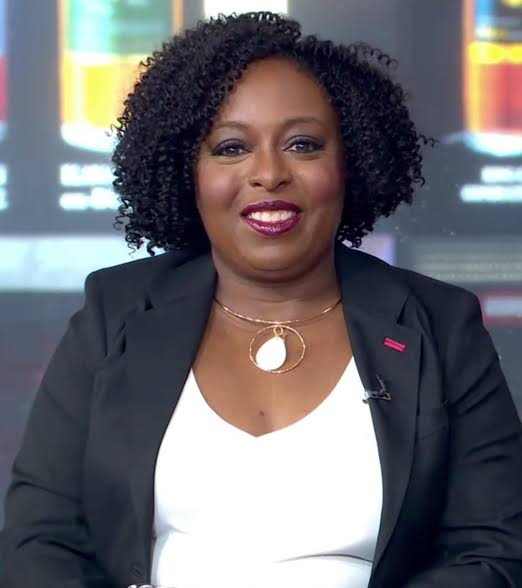
Kimberly Bryant is the founder of Black Girls CODE, an organization created to introduce young Black girls to technology and computer science.
While her work extends beyond artificial intelligence, its impact on the future of AI is significant.
By helping more Black girls gain access to coding and technology education, Black Girls CODE contributes to building a more diverse generation of future engineers, developers, and technology leaders.
Why Black Leadership Matters in AI
Artificial intelligence will influence healthcare, education, finance, employment, entertainment, government, and countless other areas.
That makes diversity in AI development more than a representation issue. It is also about ensuring that different experiences and perspectives are considered when technologies that affect millions of people are designed.
The leaders on this list are approaching AI from different directions—research, ethics, policy, education, privacy, and technology advocacy.
Together, they demonstrate that Black participation in AI is not just about being included in the industry. It is about helping shape where the industry goes next.
The Future Is Being Built Now
AI is still developing rapidly, and the decisions being made today will influence technology for decades.
Black researchers, entrepreneurs, educators, and policymakers have an important role to play in making that future more innovative, inclusive, and accountable.
The future of artificial intelligence should reflect the diversity of the world it is being built to serve.