Black Americans and the 2026 Election: What Voters Need to Know

Share
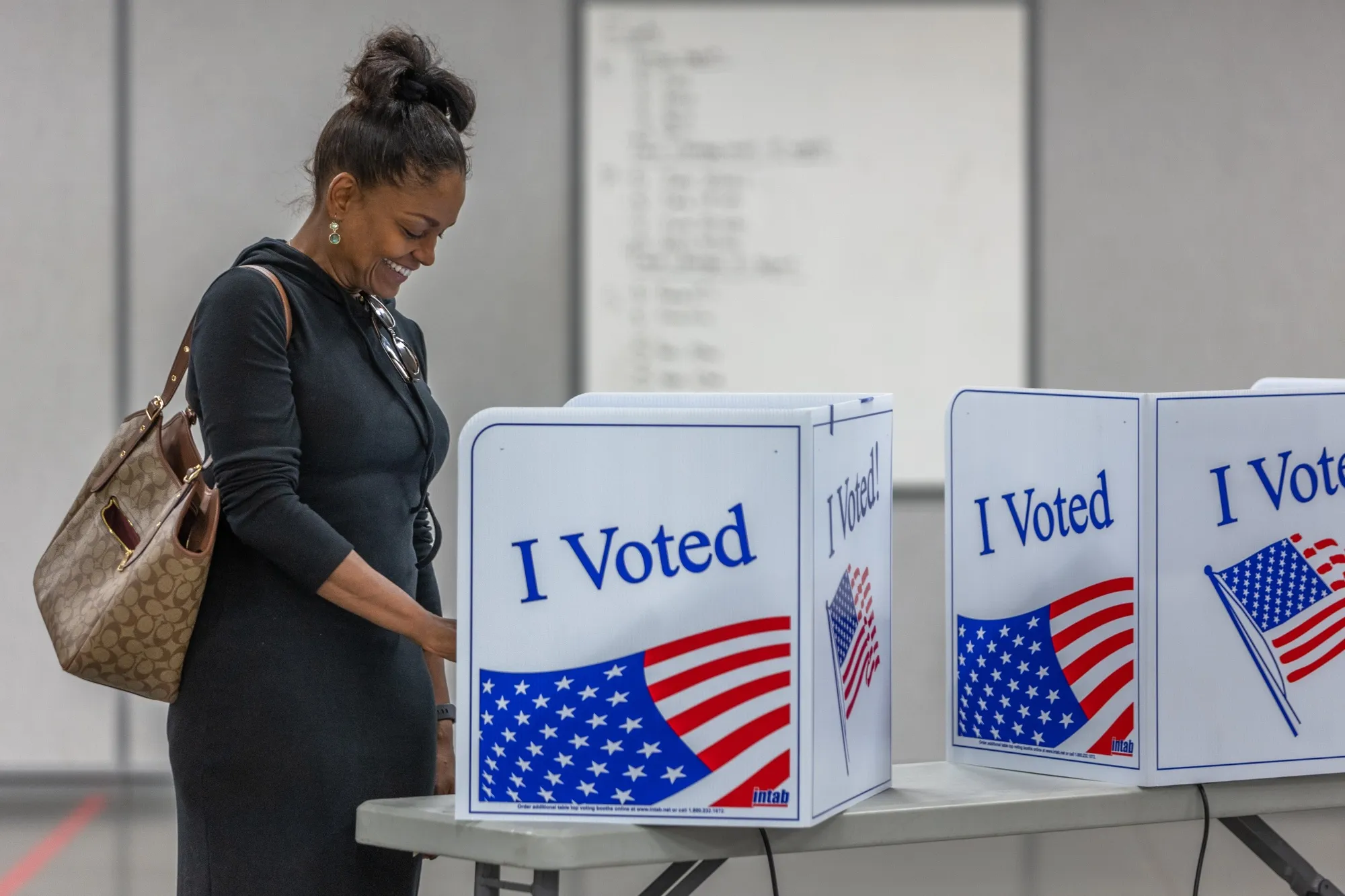
The 2026 U.S. midterm elections are approaching, and Black voters remain an important part of the American electorate. With congressional control, state governments, voting rules and representation on the ballot, the November elections will have consequences for communities across the country.
The 2026 general election is scheduled for November 3, 2026. Unlike a presidential election, the midterms do not include a presidential race. Instead, voters will decide races for the U.S. House of Representatives, one-third of the U.S. Senate and thousands of state and local offices.
For Black Americans, the election comes at a time of significant political and economic debate. The cost of living, jobs, healthcare, voting rules, immigration, public safety, education and the future of federal programs are among the issues shaping the national political conversation.
Recent polling from Pew Research Center shows that the economy is one of the central concerns heading into the 2026 midterms. Pew’s July 2026 survey also found differences in voting preferences across racial and ethnic groups, underscoring the importance of understanding how different communities are approaching the election.
Why the 2026 Election Matters to Black Voters
The 2026 election will determine who controls Congress for the remainder of President Donald Trump’s current term.
Every seat in the U.S. House is scheduled to be contested, while 35 Senate seats are on the 2026 ballot. State legislative elections and gubernatorial contests will also determine political leadership in communities across the country.
Congressional elections can influence federal legislation involving taxes, healthcare, education, employment, criminal justice, housing, infrastructure and other areas that affect Americans’ daily lives.
For Black communities, congressional representation can also affect how issues involving civil rights, voting access, economic opportunity and federal funding are debated in Washington.
The Economy Is a Major Election Issue
Economic concerns are expected to be among the most important issues for voters in 2026.
Americans are entering the midterm campaign focused on affordability and household finances. Pew Research Center reported in July that economic issues are at the center of voters’ attention, with Americans closely divided over which political party they trust more to handle the economy.
For Black Americans, economic questions can include wages, employment opportunities, housing costs, access to credit, small-business opportunities, retirement security and the ability to build and maintain household wealth.
Research from Brookings has also highlighted affordability as a major concern for Black and Latino voters ahead of the midterms, with economic conditions influencing political attitudes.
Voters will have to evaluate candidates based on their proposals and records on economic issues rather than relying solely on campaign slogans.
Voting Rights Remain a Major Issue
Voting rules have changed in several states, making it important for voters to understand the requirements where they live.
There is no single national voter-registration deadline. Vote.gov explains that registration deadlines vary by state, with some states allowing registration on Election Day and others requiring voters to register weeks before the election.
States also differ in their rules for early voting, absentee voting, mail ballots, voter identification and registration.
The Brennan Center reported in its 2026 state voting-law roundup that several states have enacted or considered changes affecting voting procedures, including requirements involving documents such as passports or birth certificates.
That means voters should check the official election information for their state rather than assuming that the rules from a previous election remain unchanged.
Redistricting Could Affect Black Representation
Congressional district boundaries are another important issue in the 2026 elections.
Redistricting normally follows the decennial census, but several states have been involved in new congressional map changes during the current decade.
The U.S. Supreme Court’s April 2026 decision in Louisiana v. Callais has also affected the legal landscape surrounding congressional redistricting and the Voting Rights Act.
The consequences can be significant for Black voters because congressional district boundaries can affect whether communities with large Black populations are able to elect candidates of their choice.
A current example is Alabama’s 2nd Congressional District. Following redistricting, the district’s Black voting-age population declined from 48% to 40%, according to reporting from The Associated Press. The district’s boundaries were redrawn after legal and political disputes over representation.
Redistricting therefore remains an important part of understanding the 2026 congressional elections.
Black Representation in Congress
Black Americans have made significant gains in political representation over the past several decades, but representation remains a major subject of discussion.
Black members of Congress currently serve in both the House and Senate and represent communities across the country.
The 2026 elections could change the number and geographic distribution of Black members of Congress depending on the results of individual races.
Some contests are particularly important because redistricting has changed district boundaries, while others involve incumbents seeking reelection in competitive political environments.
For voters, the key question is not simply how many Black candidates are on the ballot. It is also whether candidates understand the communities they seek to represent and what policies they propose.
Black Voters Are Not a Single Political Bloc
One important point often overlooked during election coverage is that Black Americans do not all vote the same way.
Black voters have different views on the economy, healthcare, education, public safety, immigration, taxes, foreign policy and other issues.
Political parties and campaigns often compete aggressively for Black voters, but individual voters make their own decisions based on their priorities and beliefs.
Pew Research Center’s 2026 polling demonstrates differences in political preferences among demographic groups while showing that economic concerns are broadly important heading into the midterms.
That makes it important to examine candidates and issues individually rather than treating Black voters as one uniform political group.
Early Voting and Mail Voting
Voting before Election Day is available to voters in most states, although the rules differ.
According to the Election Innovation Research project, 47 states and Washington, D.C., are expected to offer all voters an opportunity to vote early in person during the 2026 general election. Thirty-seven states and Washington, D.C., also offer all voters the option to vote by mail without requiring a specific reason.
However, eligibility requirements, application deadlines and ballot-return rules vary.
Mail-ballot deadlines can also differ significantly from one state to another. Some states require ballots to arrive by Election Day, while others allow certain ballots postmarked by Election Day to arrive later.
Voters should therefore verify the exact rules in their state before choosing how to vote.
What Black Voters Should Check Before Election Day
Black Americans preparing to vote in 2026 should make sure they understand several basic pieces of election information.
First, check voter-registration status and confirm that personal information is accurate.
Second, find out which congressional, state and local districts the voter lives in. Redistricting may mean that a voter’s district has changed since the last election.
Third, review the candidates and ballot measures that will appear on the ballot.
Fourth, verify identification requirements and determine whether early voting or mail voting is available.
Finally, check the official election website for the state or local election authority for deadlines and polling-place information.
Vote.gov provides a state-by-state starting point for voter registration information.
Why Local Elections Matter Too
The 2026 election is not only about Washington.
State legislatures, governors, county governments, city governments, school boards and other local offices can make decisions that directly affect communities.
State lawmakers can influence education policy, voting rules, criminal justice, healthcare policy, taxes and other areas.
Local officials can have responsibilities involving schools, policing, housing, transportation, public services and community development.
For Black communities, these races can sometimes have a more immediate effect on daily life than national elections.
The 2026 Election and the Future of Black Political Power
The 2026 midterms arrive during a period of major political change in the United States.
Voting rules are evolving in several states. Congressional districts are being contested and, in some places, redrawn. Economic concerns are dominating much of the political conversation, while both major parties are competing for support from voters across the country.
For Black Americans, the election represents an opportunity to determine who will represent their communities at the federal, state and local levels.
The most important step is to become informed before casting a ballot.
Voters should examine candidates’ records, compare their policy positions, understand the rules in their state and use reliable election information when making decisions.
The 2026 midterm elections will not be decided by national headlines alone. They will be decided by voters in individual congressional districts, states, counties and communities across America.
For Black voters, understanding what is on the ballot, how the rules work and what candidates are proposing will be essential to participating in one of the most consequential elections of the current political era.