

Winter Forecast: Where Snow Could Hit the U.S. This Winter

Share
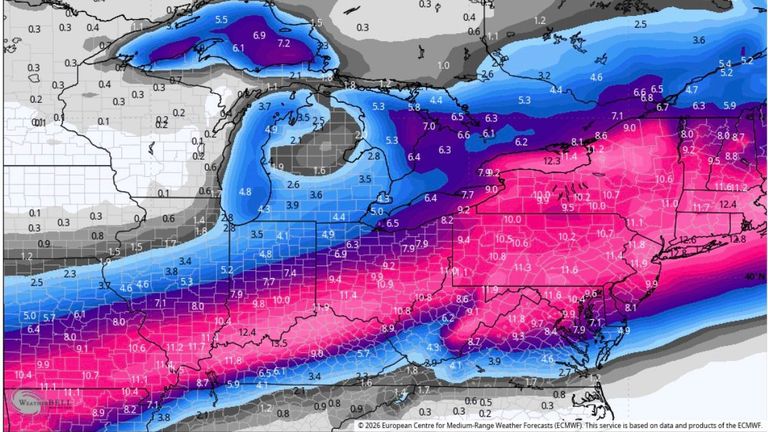
Snow is trending across the United States, and Americans are already looking ahead to the winter of 2026–2027.
The growing interest comes after the Farmers’ Almanac released its latest long-range winter forecast, while NOAA’s Climate Prediction Center reported that El Niño is strengthening and could become a very strong event by late 2026.
The combination has raised expectations for a potentially active winter, particularly across parts of the South, Southwest and East. But while the early signals are attracting attention, forecasters caution that it is still too soon to predict exactly how much snow individual cities will receive.
According to NOAA’s Climate Prediction Center, El Niño is currently present and is expected to strengthen through the end of 2026. NOAA said there is a 97% chance that El Niño will continue through early spring 2027, with an 81% chance of a very strong event during October through December 2026.
That would place the developing El Niño among the strongest events in the historical record if the forecast holds. However, NOAA also stresses that even the strongest El Niño events do not produce the same weather impacts everywhere.
Farmers’ Almanac Predicts a Winter of “Snow, Sleet and Surprises”
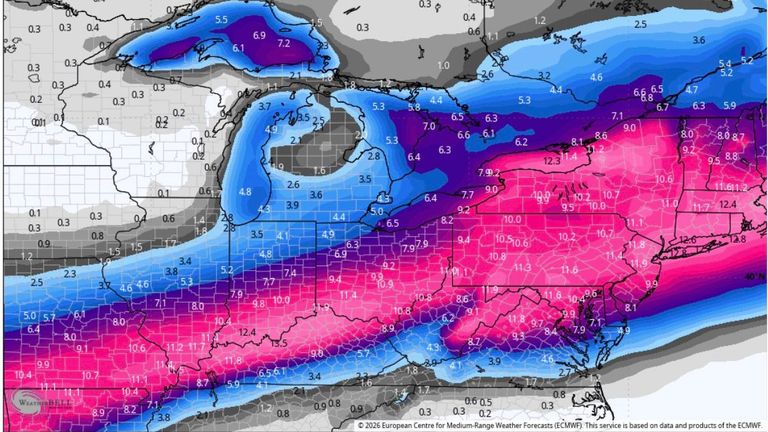
The Farmers’ Almanac has helped fuel the growing conversation with its early outlook for the 2026–2027 winter season.
The publication is forecasting a wetter-than-usual winter across much of the southern United States as a strengthening El Niño influences the country’s weather patterns. The expected storm track could stretch from Southern California and Texas across the Gulf Coast and into parts of the Southeast.
That does not mean every area in the South will see major snowfall.
Snow depends heavily on temperatures. If cold air is in place when a moisture-filled storm arrives, rain can change to snow, sleet or freezing precipitation. If temperatures remain above freezing, the same system may bring heavy rain instead.
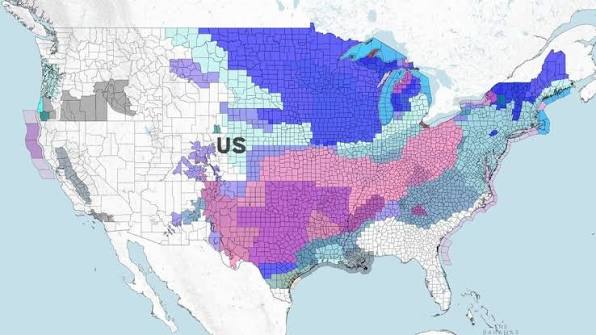
The Farmers’ Almanac has pointed to the possibility of wintry weather across parts of the South and higher elevations, including areas of the Appalachians, while also forecasting changing winter conditions across other regions of the country.
NOAA Says El Niño Could Become Very Strong
One of the biggest reasons the 2026–2027 winter is getting so much attention is the developing El Niño.
NOAA’s July 2026 ENSO Diagnostic Discussion said El Niño had strengthened over the previous month and was expected to intensify through the end of the year. The agency placed the chance of a very strong El Niño at 81% for the October-through-December period.
NOAA had previously estimated a 63% chance of a very strong El Niño during November 2026 through January 2027.
El Niño occurs when ocean temperatures in parts of the equatorial Pacific become warmer than average and interact with the atmosphere. Those changes can influence weather patterns around the world, including the position and strength of storm tracks affecting the United States.
For the United States, a strong El Niño can tilt the odds toward wetter conditions across parts of the southern tier of the country. That increased moisture can create opportunities for major winter storms, but whether those storms produce rain, snow or ice depends on local temperatures and atmospheric conditions.
Where Could Snow Become a Bigger Story?
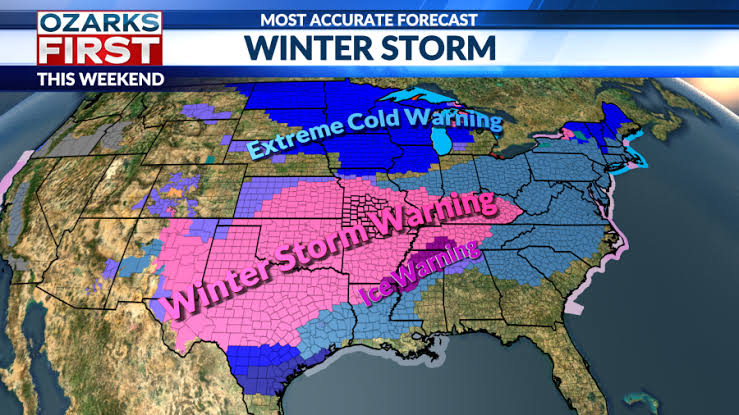
Several regions are already attracting attention as meteorologists watch how the developing El Niño pattern evolves.
In the Southwest, an active Pacific storm pattern could bring increased precipitation. Mountain areas are especially likely to benefit from colder temperatures at higher elevations, increasing the potential for snow.
Across Texas and the Southern Plains, a wetter winter could create opportunities for wintry precipitation when cold air pushes south. Northern parts of Texas generally have a greater chance of experiencing snow or ice during these situations than areas farther south.
The Southeast and Appalachian region could also see a mix of rain, sleet, freezing precipitation and snow, particularly at higher elevations. The interaction between cold air and a wetter storm pattern could make winter weather a major issue during some storms.
For the Midwest, Great Lakes and northern states, snow will remain a major part of winter, with the Farmers’ Almanac predicting cold periods and snow events in parts of those regions.
The Northeast and Mid-Atlantic will also be closely watched. In those regions, even a small difference in temperature can determine whether a major storm brings heavy rain, ice or significant snowfall.
Why Is Snow Trending During August?
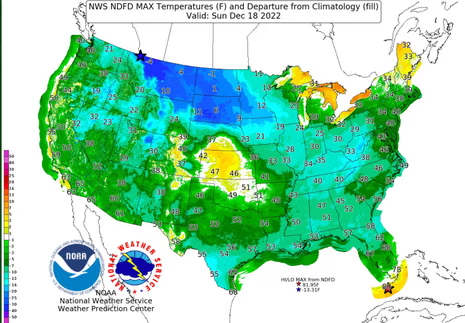
Part of the reason the topic has become so popular is the timing.
Much of the United States is still dealing with summer heat, yet winter forecasts and snow maps are already circulating online.
The Farmers’ Almanac’s release of its 2026–2027 outlook, combined with NOAA’s increasingly confident El Niño forecast, has given Americans an early reason to start talking about winter.
The Old Farmer’s Almanac has also released its winter predictions for 2026–2027 and identified El Niño as one of the major climate signals shaping expectations for the coming season.
The contrast between summer heat and talk of snowstorms has helped make winter weather an increasingly popular topic online.
Rare August Snow Adds to the Conversation
Unusual weather events have added another layer to the growing discussion.
Tropical Storm Lala recently brought extreme weather to Hawaii, including destructive winds and torrential rainfall. Reports indicated that Mauna Kea, one of Hawaii’s highest peaks, may also have received snow during the storm because of the combination of high elevation, cold temperatures and tropical moisture.
The possibility of snow in Hawaii during August offered a dramatic reminder that winter-like weather can occur at high elevations even while much of the United States is experiencing summer temperatures.
What Americans Should Know About the 2026–2027 Winter Forecast
The early outlook suggests that the 2026–2027 winter could be heavily influenced by one of the strongest El Niño events in decades.
NOAA has high confidence that El Niño will continue and strengthen through the end of 2026, but that does not mean NOAA is predicting a specific amount of snow for every state or city.
That distinction is important as long-range snow maps and predictions continue circulating online.
Seasonal climate outlooks can show where certain temperature and precipitation patterns are more likely, but they cannot reliably forecast the exact number of inches of snow that will fall in a particular city months in advance.
A wetter-than-normal winter could mean heavy snow in one location and heavy rain just a few hundred miles away.
The Farmers’ Almanac’s forecast of an active and potentially surprising winter is one long-range outlook, while NOAA’s El Niño projections are based on ocean and atmospheric observations and climate models. Together, they are helping explain why Americans are already paying attention to snow months before winter officially arrives.
For now, the biggest story is not that every part of America is guaranteed a historic snow season. The bigger story is that a strengthening El Niño could significantly influence the country’s winter weather pattern.
As fall approaches and NOAA releases additional seasonal outlooks, forecasters should have a clearer picture of which parts of the United States are most likely to experience colder, wetter or snowier conditions.
Until then, the 2026–2027 winter forecast has already succeeded in doing one thing: getting Americans to talk about snow while summer is still here.