

Louisiana Redistricting Sparks New Debate Over Black Political Representation

Share
Louisiana has become the center of a major national debate over Black political representation after the U.S. Supreme Court struck down a congressional map that created a second majority-Black district in the state.
The dispute has raised important questions about the Voting Rights Act, racial representation and how much consideration can be given to race when states draw congressional districts.
The case, Louisiana v. Callais, reached the Supreme Court after Louisiana lawmakers adopted a new congressional map in 2024 that created a second majority-Black district. The map was drawn after a federal court had found that the state’s earlier congressional map illegally diluted the voting power of Black residents.
On April 29, 2026, the Supreme Court ruled 6-3 that Louisiana’s new map used race in an unconstitutional way. The decision effectively invalidated the map that had been designed to provide Black voters with a second district in which they could potentially elect a candidate of their choice.
The ruling has placed Louisiana’s congressional districts at the center of a broader national discussion about how voting rights protections should work when race, geography and political representation intersect.
Why Louisiana’s Congressional Map Matters
Louisiana has six congressional districts, but for years only one district was majority-Black despite Black residents making up roughly one-third of the state’s population.
Civil rights groups and voting-rights advocates had argued that the original congressional map weakened Black voting power by concentrating or dispersing Black voters in ways that limited their ability to elect representatives of their choice.
That argument led to litigation under Section 2 of the Voting Rights Act.
After earlier court proceedings, Louisiana lawmakers adopted a 2024 map that created a second majority-Black congressional district. That map became the subject of another legal challenge, this time from voters who argued that lawmakers had relied too heavily on race when drawing the boundaries.
The Supreme Court ultimately sided with the challengers and ruled that the map constituted an unconstitutional racial gerrymander.
What the Supreme Court Decision Changed
The Supreme Court’s decision has implications beyond Louisiana.
At the center of the case was the relationship between the Voting Rights Act and the Constitution. The dispute involved whether Section 2 of the Voting Rights Act could justify the intentional creation of a second majority-Black congressional district.
The Court did not simply eliminate Section 2 of the Voting Rights Act. Instead, the ruling placed significant limits on how race can be used when drawing congressional districts and rejected the idea that compliance with Section 2 automatically justified creating a majority-minority district.
That distinction is important because Section 2 has historically been used to challenge electoral systems that weaken minority voters’ ability to participate meaningfully in elections.
Legal scholars and voting-rights organizations have warned that the ruling could affect redistricting disputes in other states, particularly where lawmakers are considering race as part of efforts to create districts that provide minority communities with greater electoral opportunity.
The Impact on Black Political Representation
For Black communities in Louisiana, the issue is about more than the boundaries on a map.
Congressional districts determine which communities are grouped together and which voters have the opportunity to influence the election of their representative.
Supporters of the second majority-Black district argued that the map gave Louisiana’s large Black population a greater opportunity for congressional representation.
Opponents argued that drawing a district primarily because of race violates constitutional protections and creates an impermissible racial classification.
The competing arguments illustrate one of the most difficult questions in American redistricting: how can governments protect minority voting power without using race in a manner that the Constitution prohibits?
The Supreme Court’s Louisiana decision has made that question even more significant for future elections.
Louisiana Had to Change Its Election Plans
The Supreme Court ruling also created an immediate election problem for Louisiana.
After the decision, the state was barred from conducting congressional elections under the invalidated map. Louisiana Gov. Jeff Landry said the ruling created an immediate consequence for the state and required lawmakers and election officials to develop a new path forward.
The governor subsequently suspended the congressional primary elections that had been scheduled for May and June while lawmakers worked on new congressional districts. His executive order directed the Legislature to enact new congressional maps and establish the procedures needed to conduct the 2026 congressional elections.
Louisiana’s Legislature subsequently enacted a new congressional plan during its 2026 regular session. The state’s official redistricting website now lists Congress Act 2, Senate Bill 121, among the enacted congressional plans for 2026.
The changes demonstrate how quickly a court ruling over redistricting can affect the practical administration of an election.
A Broader Debate Over the Voting Rights Act
The Louisiana case has become part of a much larger national debate about the future of voting-rights protections.
Voting-rights advocates have argued that the Supreme Court’s decision could make it more difficult for minority communities to challenge district maps that reduce their political influence.
Supporters of the ruling, meanwhile, have emphasized the constitutional limits on using race as the dominant factor in drawing electoral districts.
The disagreement reflects two competing principles: protecting minority voters from discrimination while also preventing governments from assigning voters to political districts primarily according to race.
The debate is likely to continue as states confront new redistricting challenges and as courts interpret the boundaries established by the Louisiana decision.
Black Representation Remains a National Issue
The Louisiana controversy comes at a time when Black political representation is receiving renewed attention across the United States.
Civil rights leaders and voting-rights organizations have recently highlighted redistricting, voting access and representation as major issues ahead of the 2026 midterm elections.
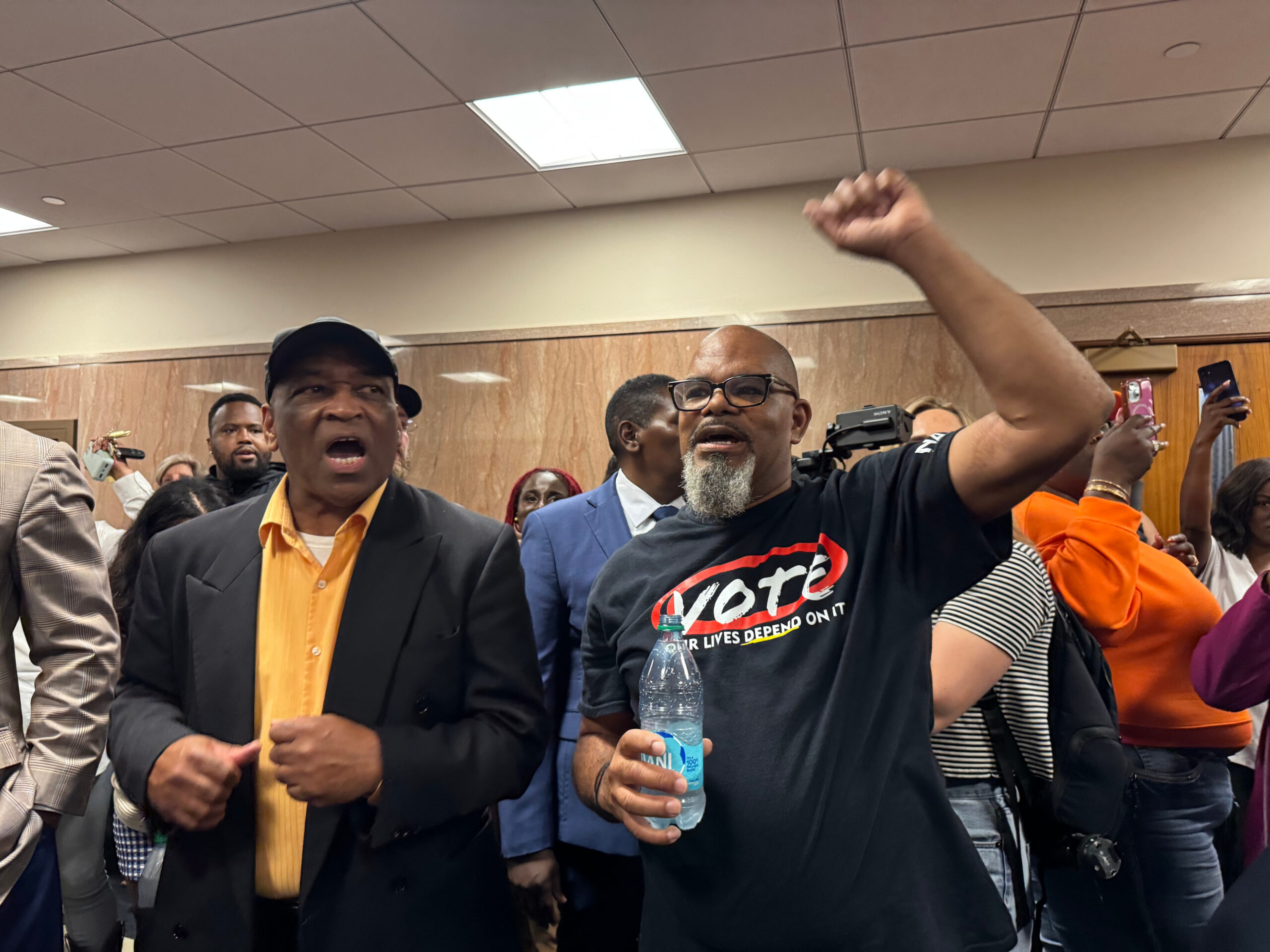
At a large voting-rights demonstration in Washington, D.C., in August, speakers and activists specifically pointed to the Louisiana ruling as part of a broader concern about changes to voting rights and political representation.
The debate extends beyond Louisiana because congressional districts can influence who has access to political power at the federal level.
For Black communities, the question is particularly significant because representation can affect which issues receive attention in Congress, from economic opportunity and education to healthcare, infrastructure and civil rights.
What Comes Next
Louisiana’s redistricting battle is unlikely to be the final word on the role of race in American elections.
The Supreme Court’s decision has established new legal boundaries for how race can be considered when congressional districts are created. States, lawmakers, civil rights organizations and voters will now have to navigate those boundaries in future redistricting disputes.
For Black voters in Louisiana, the central question remains whether the state’s new congressional districts will provide meaningful opportunities for political representation.
For the country as a whole, Louisiana has become an important test of how American law balances equal protection, voting rights and the constitutional limits on race-conscious government action.
The outcome could influence not only Louisiana’s congressional delegation but also the future of Black political representation and voting-rights litigation across the United States.