

Malcolm X: The Life, Ideas and Legacy of One of America’s Most Influential Black Leaders

Share
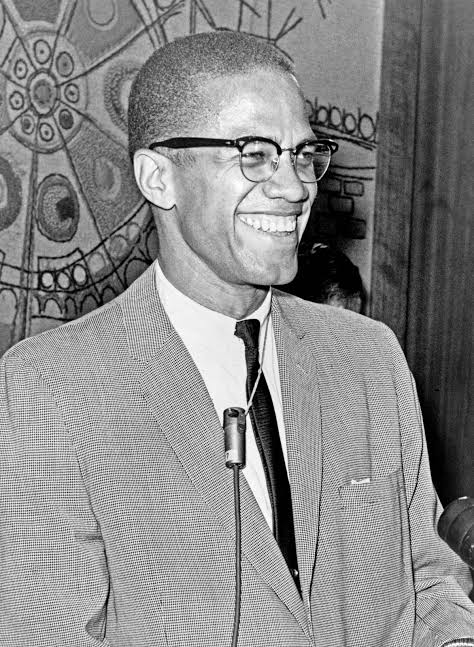
Few figures in American history have undergone a transformation as profound, or left a legacy as enduring, as Malcolm X. From a childhood scarred by racial violence to his rise as one of the most powerful voices for Black empowerment in the 20th century, Malcolm X’s life remains one of the most studied and searched stories in Black history. Decades after his death, his words continue to shape conversations about race, identity, and justice in America.
A Childhood Shaped by Struggle
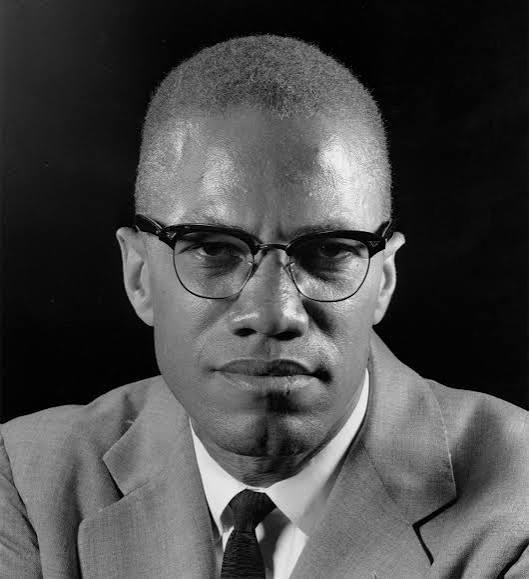
Malcolm Little was born in Omaha, Nebraska, in 1925, to parents who were followers of Marcus Garvey’s Pan-Africanist movement. His early years were marked by trauma: his family’s home was burned down, allegedly by white supremacists, and his father died under suspicious circumstances when Malcolm was just six years old. His mother, left to raise eight children alone, was eventually institutionalized, and Malcolm was placed in foster care.
Despite showing academic promise, Malcolm left school after a teacher told him his dream of becoming a lawyer was “no realistic goal for a n*gger.” That moment stayed with him for the rest of his life, and it foreshadowed the sharp critique of American racism that would come to define his public voice.
Incarceration and Transformation
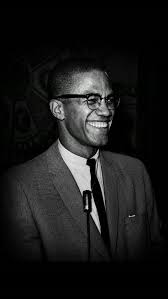
As a young man, Malcolm moved to Boston and then Harlem, where he became involved in criminal activity that eventually led to his arrest and imprisonment in 1946. It was in prison that his life changed course. Malcolm educated himself extensively, reading voraciously and studying the teachings of the Nation of Islam, a Black nationalist religious movement led by Elijah Muhammad. He converted while incarcerated and, upon his release in 1952, changed his surname to “X,” a symbol rejecting the name inherited from slaveholders and representing his lost African identity.
Rise as a National Voice
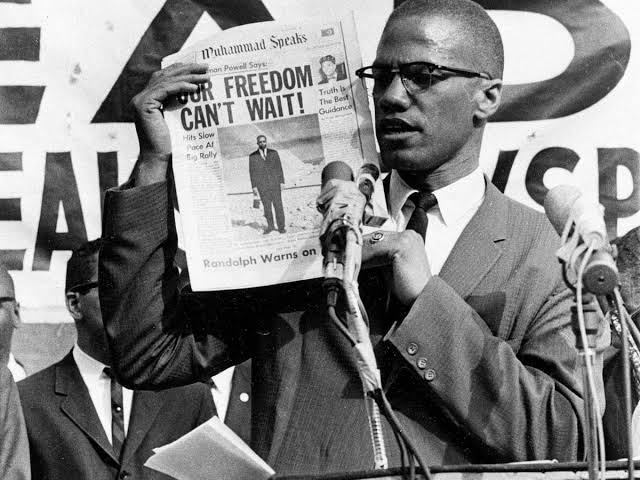
Malcolm X quickly became the Nation of Islam’s most prominent minister and spokesman. His speeches were direct, unapologetic, and electrifying, calling out systemic racism and advocating for Black self-reliance, self-defense, and pride. Where many civil rights leaders of the era emphasized integration and nonviolent protest, Malcolm X argued for Black empowerment “by any means necessary,” pushing the movement to confront the depth of racial injustice in America without compromise.
His influence grew rapidly through the late 1950s and early 1960s, as he became a fixture in media appearances, university debates, and mass rallies, challenging both white America and the broader civil rights establishment to rethink their approach to equality.
A Pilgrimage That Changed His Worldview
In 1964, Malcolm X broke from the Nation of Islam and undertook a pilgrimage to Mecca, an experience that reshaped his views. Encountering Muslims of many races praying together as equals, he embraced Sunni Islam and adopted the name El-Hajj Malik El-Shabazz. He returned to the United States with a broadened perspective, expressing greater openness to alliances across racial lines while remaining firm in his commitment to Black self-determination and human rights.
This period also saw him found the Organization of Afro-American Unity, aiming to connect the American civil rights struggle with a broader, global movement for Pan-African solidarity and human rights.
Assassination and an Unfinished Legacy
On February 21, 1965, Malcolm X was assassinated in New York City while preparing to deliver a speech, a killing that stunned the nation and cut short a life still very much in transformation. He was only 39 years old.
Later that year, The Autobiography of Malcolm X, co-written with journalist Alex Haley, was published posthumously. The book became one of the most influential works in American literature, offering a raw, first-person account of his journey from poverty and crime to political awakening and spiritual reckoning. It remains, by Google’s own search analysis, the most searched autobiography in Black history, a reflection of how deeply readers continue to connect with his story of transformation.
Why Malcolm X Still Matters
Malcolm X’s ideas continue to influence movements for racial justice, Black identity, and human rights around the world. His insistence on dignity, self-respect, and unflinching honesty about systemic oppression helped expand the boundaries of the civil rights conversation, pushing it beyond legal equality toward a deeper reckoning with power, pride, and self-determination.
At Black Excos, Malcolm X stands as a symbol of radical transformation, proof that reinvention, education, and moral courage can turn even the most difficult beginnings into a legacy that shapes generations.