

Frederick Douglass: The Black History Maker Who Fought for Freedom and Equality

Share
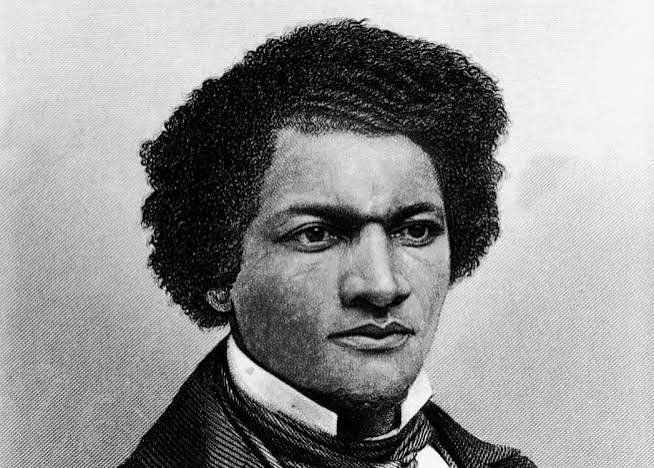
Few figures in American history embody the fight for freedom and dignity quite like Frederick Douglass. Born into slavery and denied even the right to learn, Douglass transformed himself into one of the nation’s most brilliant orators, writers, and statesmen — a man who used his voice to shake the conscience of a country and demand that it live up to its own ideals. More than a century after his death, Douglass remains one of the most searched and studied figures in Black history, a testament to the enduring power of his story.
From Bondage to Brilliance
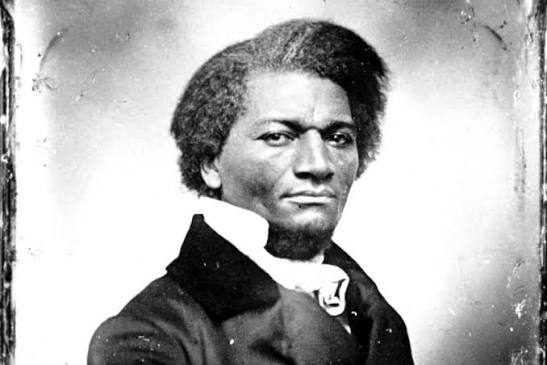
Frederick Douglass was born around 1818 in Talbot County, Maryland, enslaved from birth and separated from his mother as an infant, as was common practice under slavery. As a child, he was sent to Baltimore, where the wife of his enslaver began teaching him the alphabet — until her husband forbade it, declaring that education would make an enslaved person “unfit” for bondage. That moment became a turning point. Douglass later wrote that he understood, in that instant, that literacy was the pathway from slavery to freedom, and he pursued it in secret for years, trading bread with poor white children in exchange for reading lessons.
In 1838, at around 20 years old, Douglass escaped slavery by disguising himself as a sailor and traveling by train and boat to New York City, eventually settling in New Bedford, Massachusetts. It was there that he adopted the surname “Douglass” and began building the life that would make him a legend.
The Voice of the Abolitionist Movement
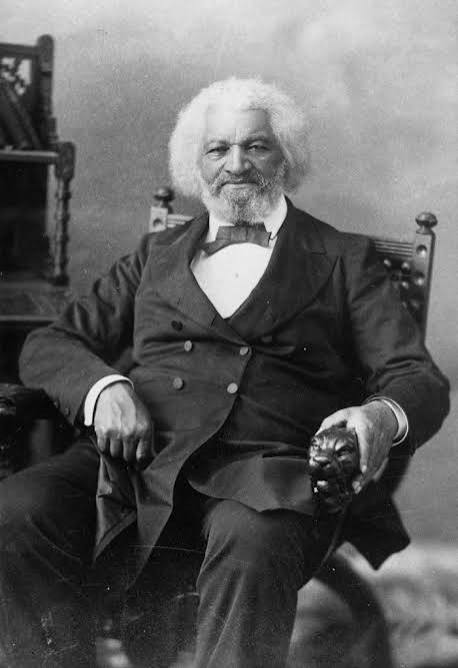
Douglass’s gift for oratory quickly caught the attention of abolitionist leaders. In 1841, he delivered a speech at an anti-slavery convention in Nantucket that so impressed audiences that he was recruited as a lecturer for the American Anti-Slavery Society. His firsthand testimony of slavery’s brutality — delivered with eloquence and moral force — made him one of the most sought-after speakers in the country, at a time when many refused to believe that a formerly enslaved man could speak with such command.
In 1845, Douglass published his first autobiography, Narrative of the Life of Frederick Douglass, an American Slave, which became a bestseller and a cornerstone of abolitionist literature. The book was so detailed and specific that it put Douglass at risk of recapture, prompting him to travel to Britain and Ireland, where supporters eventually purchased his legal freedom.
Douglass didn’t stop at speeches and books. In 1847, he founded his own newspaper, The North Star, headquartered in Rochester, New York. Its motto — “Right is of no sex, Truth is of no color, God is the Father of us all, and we are all brethren” — reflected Douglass’s belief that the fight for Black freedom was inseparable from the fight for justice more broadly, including women’s rights. He was one of the few men to attend the 1848 Seneca Falls Convention and publicly support women’s suffrage.
A Statesman for the Nation
Douglass’s influence extended into the highest levels of American politics. He advised President Abraham Lincoln during the Civil War, pushing him to accept Black soldiers into the Union Army and to frame the war explicitly as a fight to end slavery. He recruited Black troops, including his own sons, and later delivered some of the most searing critiques of American hypocrisy, including his famous 1852 address, “What to the Slave Is the Fourth of July?” — a speech still studied today for its unflinching honesty about the gap between American ideals and American practice.
After the Civil War, Douglass continued to fight for full citizenship and civil rights for Black Americans through Reconstruction and beyond. He held several federal appointments, including U.S. Marshal for the District of Columbia and Minister to Haiti, making him one of the first Black Americans to hold such high-ranking government positions.
A Legacy That Still Speaks
Frederick Douglass died in 1895, but his words and example remain foundational to American history and the ongoing pursuit of equality. Google has identified Douglass as the most searched abolitionist in its analysis of U.S. search data, a reflection of how deeply his story continues to resonate with new generations seeking to understand the roots of Black excellence, resistance, and resilience.
Douglass’s life is a reminder that freedom was never given — it was fought for, argued for, written about, and demanded, one speech and one page at a time. His journey from an enslaved child forbidden to read to one of the most influential voices in American history stands as one of the greatest stories of self-determination this country has ever produced.
At Black Excos, we honor Frederick Douglass not just as a historical figure, but as a blueprint: proof that knowledge, courage, and an unshakable belief in one’s own humanity can change the course of a nation.