The New Civil Rights Fight Is Digital, And Black Communities Are on the Front Lines

Share
The fight for civil rights in America has entered a new era. It no longer lives only in courtrooms, classrooms, or the streets, it now unfolds on screens, in algorithms, databases, and digital platforms that quietly shape everyday life. And once again, Black communities find themselves on the front lines.
In 2026, technology touches nearly every aspect of modern existence: employment, housing, education, healthcare, policing, and political participation. But as society becomes more digital, long-standing racial inequities are not disappearing. They are being coded, automated, and scaled, often without transparency or accountability.
This is the new civil rights struggle, and it is increasingly digital.
At the center of the issue is algorithmic bias. Artificial intelligence systems are now used to screen job applicants, determine creditworthiness, flag “suspicious” activity, and even influence sentencing and parole decisions. Multiple studies and civil rights investigations have shown that these systems often replicate the same racial biases present in the data used to train them. For Black Americans, that can mean fewer job callbacks, lower credit limits, higher insurance rates, and increased scrutiny from law enforcement, without a human decision-maker to challenge.
Unlike past discrimination, this form is harder to see and even harder to fight. When a landlord denies housing or a bank rejects a loan, the decision may now be blamed on “the system,” shielding institutions from responsibility while leaving Black families with no clear path to appeal.
Surveillance technology presents another front in the digital civil rights battle. Facial recognition tools, predictive policing software, and data-tracking systems are disproportionately deployed in Black neighborhoods. Civil liberties groups warn that these technologies expand government and corporate surveillance while increasing the risk of wrongful identification, harassment, and criminalization.
For many Black Americans, the fear is not hypothetical. There are documented cases of Black individuals being falsely arrested after facial recognition systems misidentified them, a consequence of technology that struggles to accurately read darker skin tones. These errors highlight a dangerous reality: when flawed technology meets systemic bias, the consequences can be life-altering.
Access remains a critical issue as well. While the internet is often described as universal, digital inequality persists. Black households are more likely to experience unreliable broadband, lack access to high-speed internet, or rely on mobile-only connections that limit educational and economic opportunities. In an era where job applications, remote work, telehealth, and civic engagement all require stable internet access, the digital divide becomes a civil rights issue, not just a technical one.
Social media platforms, once hailed as tools of empowerment, are also battlegrounds. Black creators and activists frequently report content suppression, unequal enforcement of community guidelines, and online harassment that goes unchecked. At the same time, misinformation targeting Black communities spreads rapidly, undermining trust, public health efforts, and political participation.
Yet, despite these challenges, Black communities are not passive victims in the digital civil rights era. Activists, technologists, scholars, and entrepreneurs are pushing back, demanding ethical AI, transparency in data use, and laws that protect digital freedoms. Grassroots organizations are educating communities about data privacy and digital literacy, while Black-led tech initiatives work to build platforms rooted in equity and accountability.
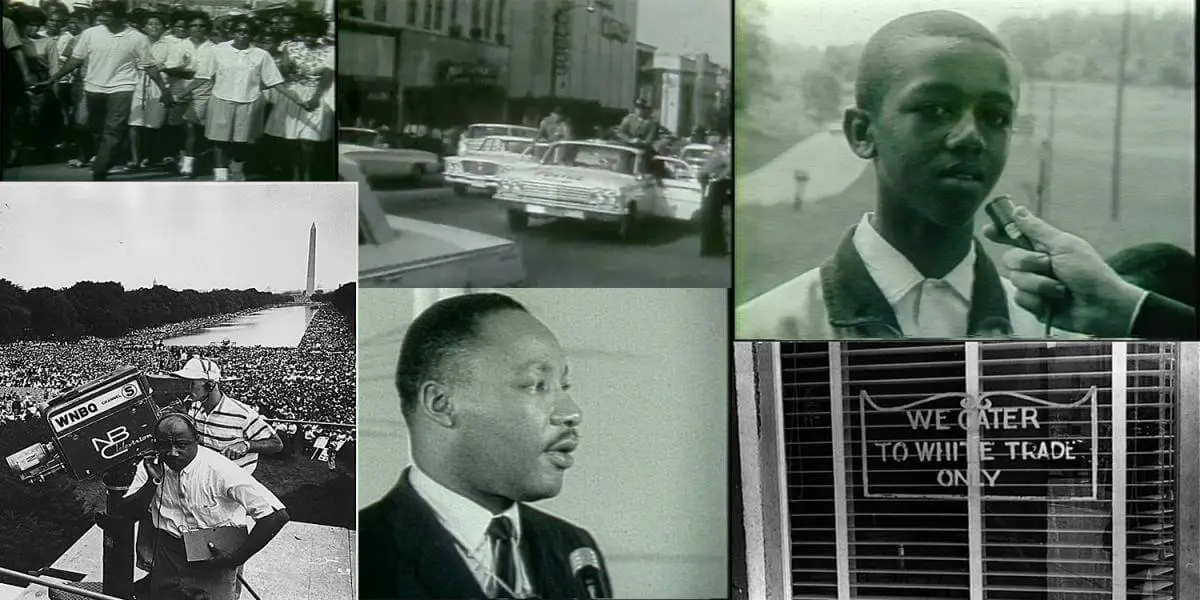
The parallels to earlier civil rights movements are striking. Then, the struggle was against literacy tests, redlining, and discriminatory laws. Today, it is against opaque algorithms, digital redlining, and unchecked surveillance. The tools have changed, but the core demand remains the same: fairness, dignity, and equal access to opportunity.
What makes this moment especially urgent is scale. Digital systems operate at speeds and volumes that magnify harm quickly. A biased algorithm doesn’t discriminate once, it does so thousands or millions of times, silently shaping outcomes across society. Without intervention, these systems risk locking racial inequality into the infrastructure of the future.
The new civil rights fight may not always look like marches or sit-ins, but its stakes are just as high. It is about who gets seen, who gets heard, who gets access, and who gets left behind in a digital-first world.
As history has shown time and again, progress does not happen by accident. Black communities have always been at the forefront of demanding justice in America. In 2026, that fight continues, this time in code, data, and digital space.