

Sojourner Truth: The Courageous Voice Who Redefined Freedom and Womanhood

Share
Sojourner Truth was more than an activist, she was a force of nature. Born into slavery in 1797 in Ulster County, New York, she escaped bondage with her infant daughter in 1826 and went on to become one of the most powerful voices for abolition and women’s rights in American history. Her words, courage, and faith broke barriers that few dared to challenge.
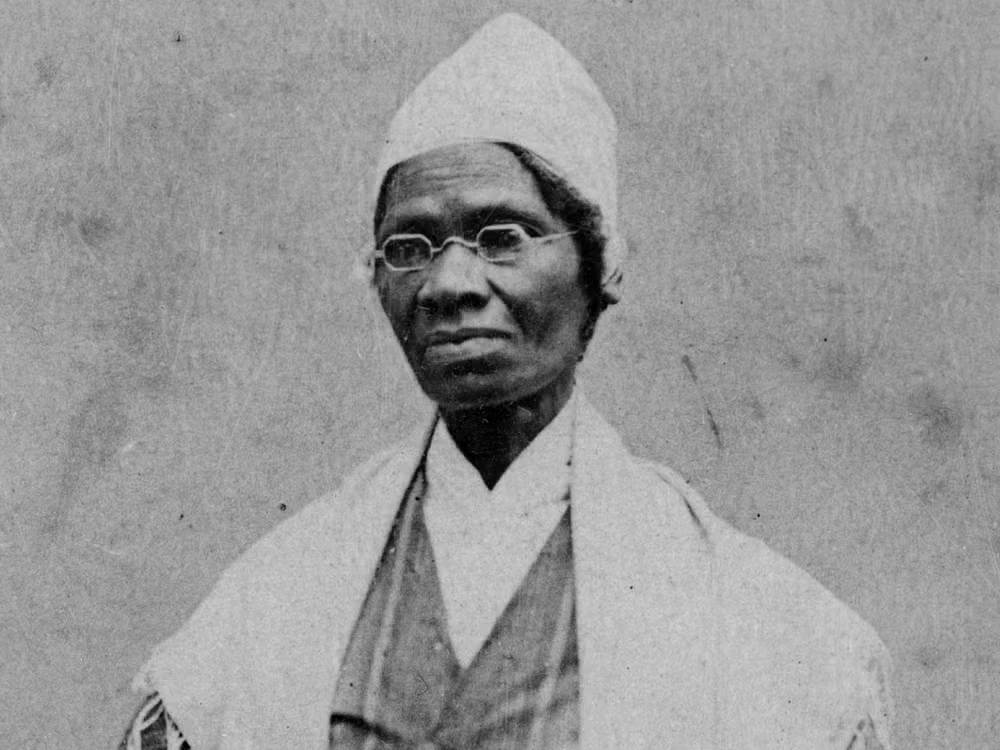
Originally named Isabella Baumfree, she changed her name to Sojourner Truth in 1843 after experiencing a spiritual awakening. She said she felt called by God to travel the country and speak “the truth” about slavery, injustice, and the need for equality. With no formal education, Truth relied on her deep conviction and commanding presence to move audiences, from rural churches to national conventions.
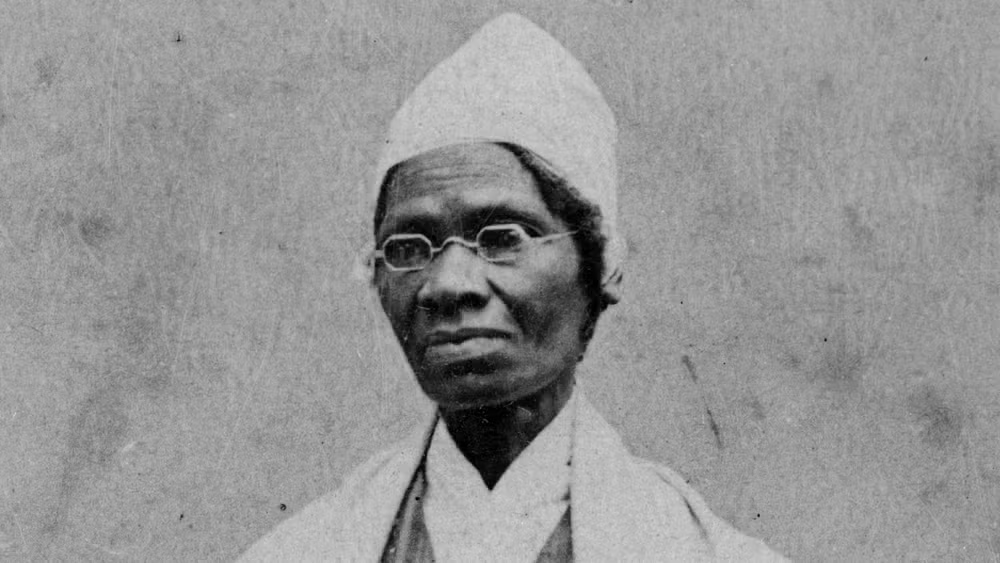
Her most famous moment came in 1851 at the Women’s Convention in Akron, Ohio, where she delivered her legendary speech, “Ain’t I a Woman?” In that brief but unforgettable address, she confronted both racism and sexism, challenging those who claimed women were too weak for equality and those who believed Black women were unworthy of protection. Her words struck a deep chord, dismantling the false narratives of her time and calling for a broader, truer vision of justice.
Truth worked alongside some of the most prominent reformers of her day, including Frederick Douglass, Susan B. Anthony, and Harriet Beecher Stowe, but she always maintained her own bold and independent voice. During the Civil War, she recruited Black troops for the Union Army and later fought for land grants for freed slaves, long after others had moved on from the cause.
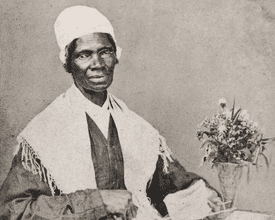
Even as she aged, Sojourner Truth continued speaking, advocating, and inspiring. She became one of the first Black women to win a court case against a white man when she sued to recover her son who had been illegally sold into slavery, a remarkable act of defiance in the 19th century.
Sojourner Truth died in 1883, but her spirit lives on in the ongoing fight for equality. Her legacy bridges the movements for racial justice and women’s rights, reminding the world that freedom is incomplete if it does not include everyone.
Her words still echo today, not as a question, but as a declaration of truth: “Ain’t I a woman?”