

Trump’s Reaction to Reiner Murder Sparks Outrage as Political Backlash Grows

Share
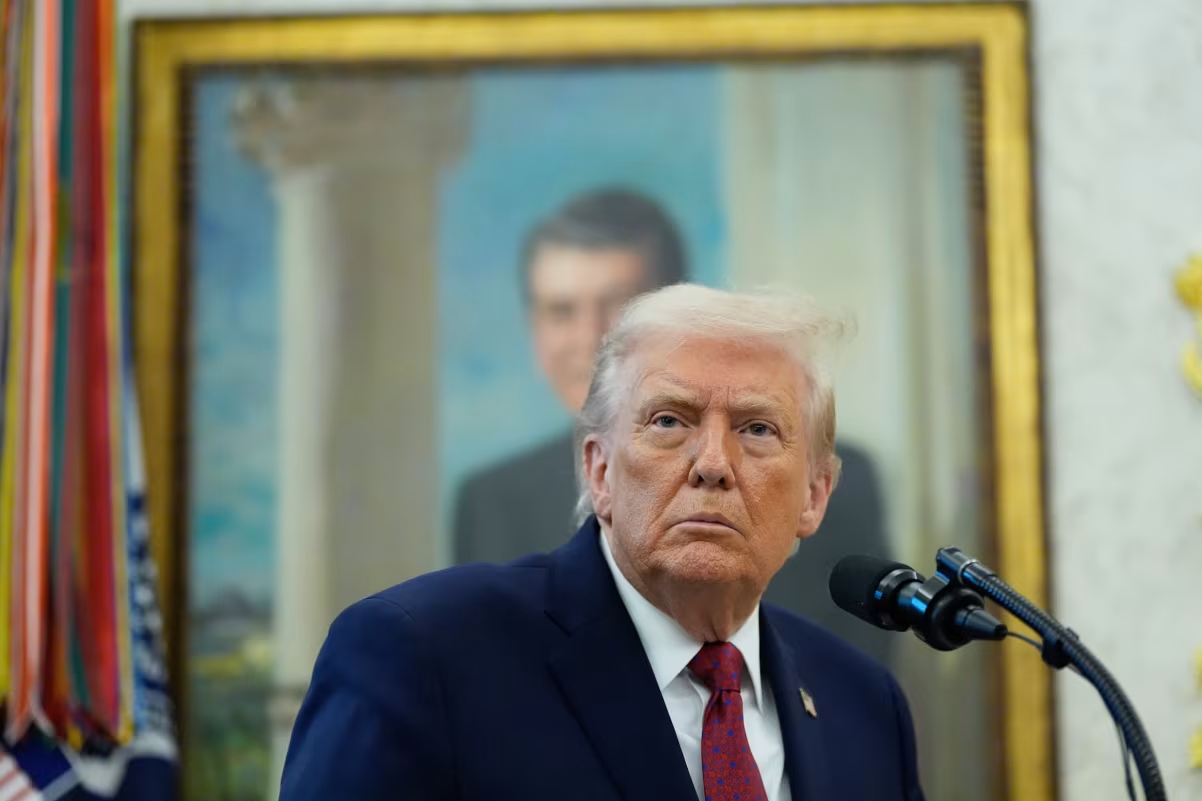
Former President Donald Trump’s response to the tragic murder of celebrated filmmaker and actor Rob Reiner and his wife, Michele Singer Reiner, has ignited a wave of criticism from across the political spectrum, with many leaders and cultural figures saying his comments politicized a deeply personal loss.
Reiner, 78, and his wife, 68, were found dead in their Brentwood, Los Angeles, home in what authorities are investigating as a double homicide. Their adult son, Nick Reiner, 32, was arrested in connection with the deaths and is being held on $4 million bail. The killings have shocked Hollywood and drawn widespread mourning.
Instead of offering condolences, Trump took to social media to comment on Reiner’s political views. In posts that quickly drew attention and criticism, Trump described Reiner as “deranged” and suggested that his outspoken criticism of the former president and embrace of what Trump labeled “Trump Derangement Syndrome” may have contributed to the tragedy. Several of Trump’s remarks implied that Reiner’s political stance and public commentary were factors in the circumstances leading up to his death.
The remarks sparked swift backlash from both Democrats and Republicans. Critics called the comments insensitive and inappropriate in the face of a violent family tragedy. On social media and in statements to the press, lawmakers such as Representative Thomas Massie and former congresswoman Marjorie Taylor Greene emphasized the need for empathy and respect during times of personal loss.
Those condemnations were echoed by cultural figures. On the daytime talk show The View, Whoopi Goldberg and her co-hosts criticized the former president for “making Rob Reiner’s horrific murder about himself,” with Goldberg questioning the tone and timing of his comments and urging leadership grounded in compassion rather than political point-scoring.
Maria Shriver, former California first lady and longtime friend of the Reiners, also publicly rebuked Trump’s remarks, calling them “petty” and lacking in dignity. In an emotional video posted to social media, Shriver urged unity and civility, stating bluntly, “we’ve had enough” of political rhetoric that exploits personal tragedy.
The backlash comes amid broader national focus on violence and political discourse. Just days earlier, a mass shooting at Bondi Beach in Sydney, Australia, during a Hanukkah celebration claimed the lives of at least 16 people in what authorities described as an antisemitic terrorist attack. Trump’s administration publicly condemned that attack as “purely antisemitic,” emphasizing solidarity with victims and allies abroad.
Experts in political communication say Trump’s remarks reflect a familiar pattern of responding to national events through a highly partisan lens. But the unusual timing, coming less than two days after the confirmed murder of a prominent cultural figure, has drawn particularly sharp criticism from observers who argue that political leaders should prioritize empathy and unity over division.
As the nation continues to react to both the Reiner family tragedy and other recent acts of violence, the debate over the role of political rhetoric, and the responsibilities of public figures in shaping national discourse, remains front and center.