Bayard Rustin: The Mastermind Behind the Civil Rights Movement

Share
Bayard Rustin: The Mind Behind the Movement
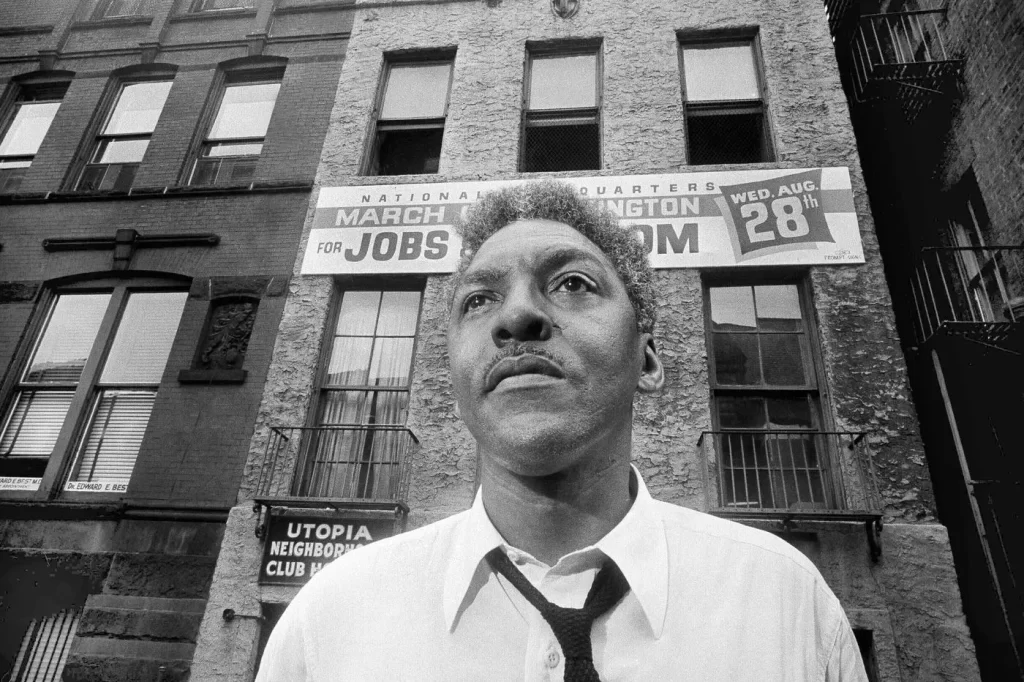
Bayard Rustin was one of the most influential figures in the American Civil Rights Movement, yet for decades, his name remained largely absent from mainstream history books. While Martin Luther King Jr. stood at the microphone, Rustin stood behind the scenes, shaping strategy, logistics, philosophy, and political direction. Without Rustin, the modern Civil Rights Movement as America knows it would not have existed in the same form.
Born in 1912 in West Chester, Pennsylvania, Rustin was raised by his grandparents, who instilled in him values of justice, discipline, and activism. From an early age, he understood that racial equality would require more than passion, it would demand organization, coalition-building, and moral clarity.
The Strategist Who Built Nonviolent Protest
Bayard Rustin was a master organizer and intellectual architect of nonviolent resistance. Long before it became the public philosophy of the Civil Rights Movement, Rustin studied and practiced nonviolence, drawing inspiration from Mahatma Gandhi’s work in India. He later introduced these ideas directly to Martin Luther King Jr., helping transform King’s approach into a disciplined national strategy.
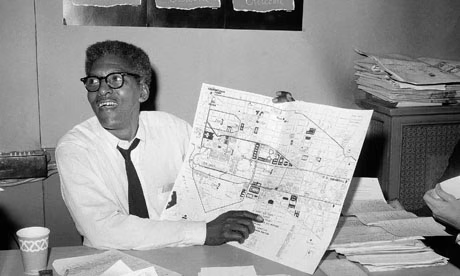
Rustin believed protests must be meticulously planned, legally sound, and politically effective. He trained activists, drafted protest manuals, and worked with labor unions, religious organizations, and political leaders to ensure movements translated into real policy change.
The March on Washington: Rustin’s Defining Achievement
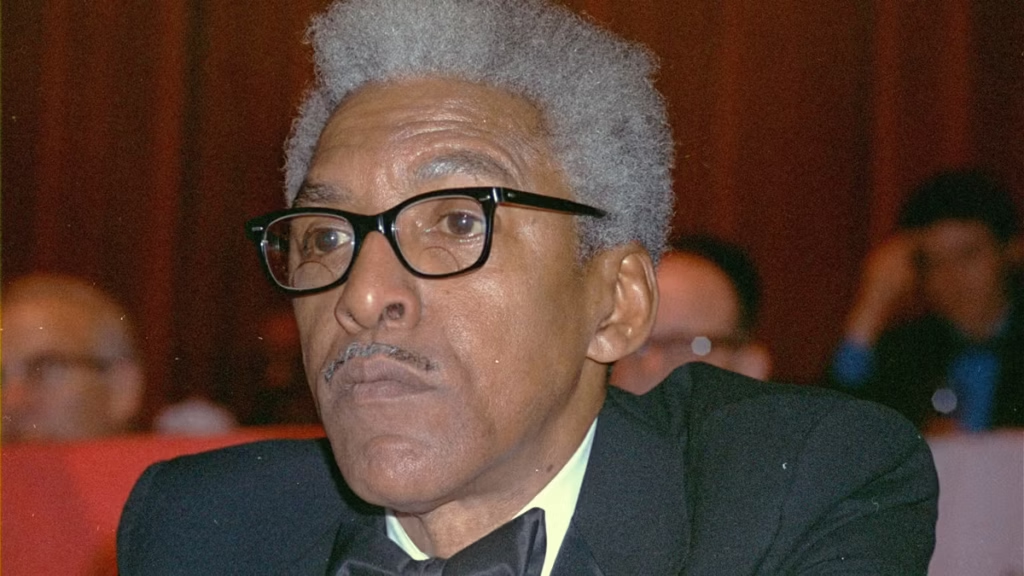
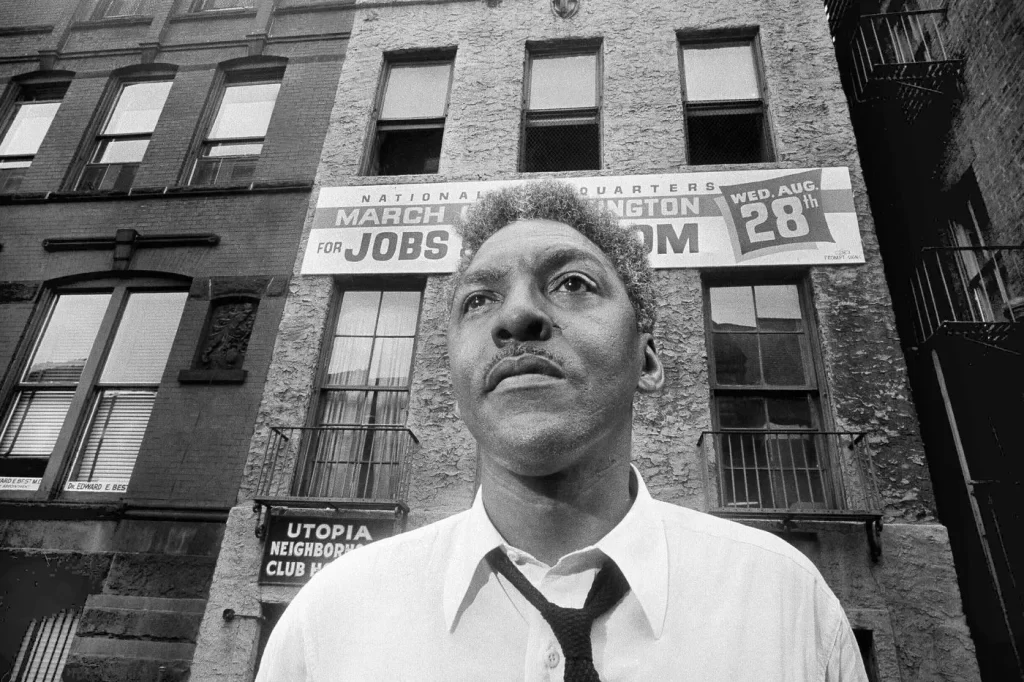
Rustin’s most significant contribution came in 1963, when he served as the chief organizer of the March on Washington for Jobs and Freedom—one of the largest political demonstrations in U.S. history. More than 250,000 people gathered peacefully at the Lincoln Memorial, where King delivered his iconic “I Have a Dream” speech.
What many don’t realize is that Rustin coordinated transportation, security, permits, sound systems, press relations, and crowd control for the entire event. Not a single arrest was made that day, an unprecedented outcome that validated Rustin’s belief in disciplined, nonviolent mass action.
Why History Tried to Silence Him
Despite his brilliance, Rustin was often pushed into the shadows because he was openly gay at a time when homophobia was weaponized against civil rights leaders. Some movement figures feared his sexuality would be used to discredit the cause, leading to his exclusion from public-facing leadership roles.
Rustin accepted this marginalization because he believed the mission mattered more than recognition. Still, the cost was steep. While others became household names, Rustin’s legacy remained quietly buried, until recent years.
Beyond Civil Rights: Labor, Peace, and Global Justice
Rustin’s activism extended beyond race. He was a leading voice in labor rights, economic justice, and anti-war movements. He later helped shape the political direction of Black leadership toward coalition politics and voter engagement, arguing that sustainable change required participation in democratic systems.
He also worked internationally, advocating for human rights and democratic reform across Africa and Europe, making him a global figure long before globalization became a buzzword.
A Legacy Finally Reclaimed
In 2013, President Barack Obama posthumously awarded Bayard Rustin the Presidential Medal of Freedom, formally acknowledging what Black historians and activists had long known: Rustin was indispensable to American democracy.
Today, Bayard Rustin stands as a symbol of intellectual courage, moral discipline, and strategic brilliance, a reminder that movements are not built by speeches alone, but by minds willing to do the hard, unglamorous work behind the scenes.
His story challenges America to reconsider who it celebrates, who it silences, and whose contributions truly shape history.