

The Forgotten African Kingdoms That Shaped African-American Identity

Share
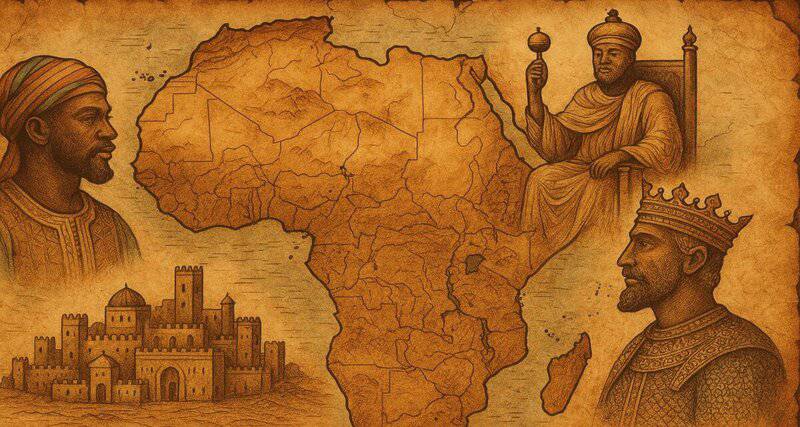
For centuries, the story of African Americans has often been told as if it began with slavery. But long before the trans-Atlantic slave trade, Africa was home to powerful kingdoms, global trade empires, legendary scholars, warriors, architects, and innovators whose influence still echoes through Black culture today.
Many of these kingdoms have been forgotten in Western education, not because they lacked power or sophistication, but because acknowledging them would destroy the false narrative that Africans had no history before European contact.
In reality, African Americans descend from some of the most advanced civilizations the world has ever seen.
This is the history that was erased.
This is the history Black America deserves to know.
The Great West African Empires: Foundations of Black Identity
Most African Americans trace their ancestry to West and Central Africa, a region filled with kingdoms that shaped world trade, mathematics, astronomy, architecture, diplomacy, and art.
Below are the empires whose legacies still live in modern Black culture, whether consciously remembered or buried beneath centuries of forced forgetting.
1. The Mali Empire, Land of Scholars, Gold, and the World’s Greatest Library
The Mali Empire (1235–1670) was one of the wealthiest civilizations in world history.
Its most famous ruler, Mansa Musa, is widely considered the richest man who ever lived.
What Mali built still inspires African Americans today:
- Timbuktu’s universities, which held over 700,000 manuscripts
- Global trade hubs connecting Africa with Europe and the Middle East
- Masters of astronomy, medicine, architecture, and mathematics
- Architectural styles still seen in Black American artistic design
Mali gave the world intellectual excellence, a legacy often stripped from the Black narrative in the West.
2. The Kingdom of Benin, Masters of Bronze, Art, and Political Organization
Located in present-day Nigeria, the Benin Kingdom (1180–1897) was a powerhouse of artistry and urban planning.
Its contributions include:
- The world-famous Benin Bronzes, artworks so advanced Europeans thought they were impossible for Africans
- A highly organized government with ministries, guilds, and taxation
- Urban walls and moats longer than the Great Wall of China
- Ceramic and bronze techniques that influence African American art forms today
Benin proves that Black civilization thrived long before colonization.
3. The Ashanti Empire, The Warrior Nation With a Legacy of Black Pride
The Ashanti Empire (1701–1902) in modern-day Ghana is known for its military strength, gold wealth, and rich cultural traditions.
Ashanti influences still visible in African American identity:
- Kente cloth patterns used in graduation stoles and cultural celebrations
- Symbols of spiritual leadership and ancestral power
- Strong traditions of matriarchy and family structure
- Warrior ethos reflected in Black cultural storytelling
Ashanti culture shapes Black American fashion, symbolism, and community values.
4. The Songhai Empire, The Power That Ruled West Africa
Songhai (1464–1591) dominated much of West Africa and built the intellectual world of Timbuktu and Gao.
Songhai contributions:
- Universities with structured curriculums in law, theology, science, and trade
- A complex system of justice that predates European law traditions
- Maritime technology along the Niger River
- Skilled diplomacy and large-scale administration
Songhai’s governance and scholarship offer a powerful counterstory to stereotypes of precolonial Africa.
5. The Kingdom of Kongo, A Central African Power With Global Influence
Much of African American ancestry leads back to West-Central Africa, including the Kongo Kingdom (1390–1914).
Kongo culture influenced:
- Spiritual practices that survived slavery (ring shout, call-and-response, ancestor reverence)
- Names, drumming patterns, and dance movements in the African diaspora
- Resistance traditions, including maroon communities and rebellions
Kongo identity still pulses through African American music, spirituality, and community structure.
Why These Kingdoms Matter for African Americans Today
Slavery was intended not only to take Africans from their homeland, but to erase every memory of who they were before captivity.
Yet, traces survived.
The survival is visible in:
- Black music
- Spiritual expression
- Family systems
- Art and storytelling
- Food traditions
- Hairstyles and symbols
- Community resilience
African Americans are not the descendants of “slaves.”
They are descendants of empires, scholars, scientists, warriors, kings, and queens, people whose cultures carried sophistication long before Europe industrialized.
Reclaiming these histories restores pride, identity, and connection to a legacy much older than the United States.
Reconnecting With the Forgotten Kingdoms
Today, DNA testing, genealogy projects, and African cultural festivals are helping Black Americans reconnect with these ancient kingdoms. Schools, museums, and digital platforms have begun re-teaching erased African history.
The more Black people learn these stories, the more they understand something powerful:
Black identity did not begin in chains, it began in kingdoms.
And those kingdoms still live through the people who descend from them.